Environment in ADHD and Autism
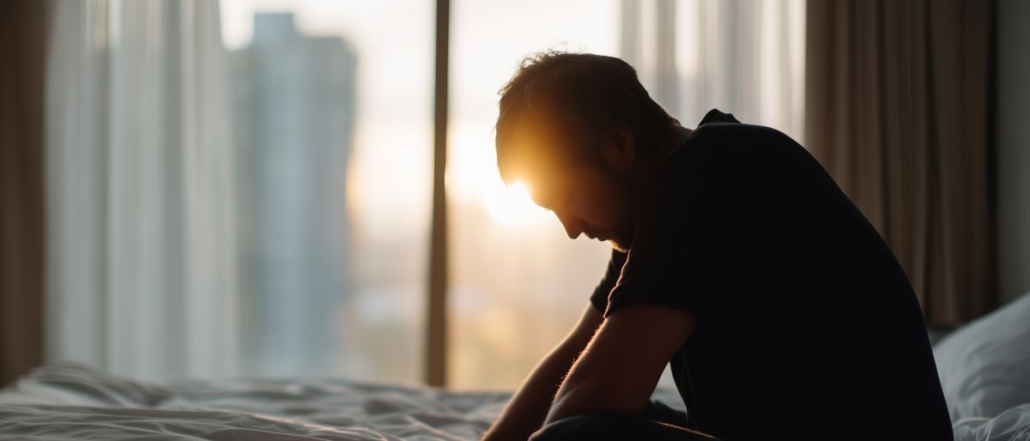
Circumstances affect heavily pathological behavior.
Third day of amnesia and worry.
Fighting with teeth in inclement weather, breathing difficulties, insufficient oxygen flow to the brain.
My health-records report amnesia 2/3 days before low-pressure weather.
This morning was sunny and I felt in recovery mode.
In the afternoon, conditions suddenly changed for the worse.
I’m pumping dopamine desperately, evidence that I am trying to react.
I have learnt through the years that Reaction comes in the form of Hyperactivity in ADHD.
Thoughts race, I come up with hundred options simultaneously.
Prioritizing is the deal.
I have gradually become more convinced that autism and ADHD are not caused solely by genetic factors, but that environmental factors also play a role; they arise from the complex interaction between genetic predisposition and environmental influences.
Climate change hit hard in the last five years.
Seasons are no longer discernible.
Thermal excursions of 10 c from one day to the next are the norm.
That puts tremendous pressure on my body and mind, making me craving home. Europe is rated best weather to date.
I’m writing this right in the midst of a sudden strong storm after a bright day.
I’m panicking.
I can’t adjust to sudden changes.
Nature is stronger than man.
We’re living on a minefield.
The medical term for this phobia is Metereopathy, autistics are extremely vulnerable.
There is no specific cure, though my psychiatrist treats me the symptoms off-label with Motion sickness’ medication, since the pathology is mostly related to high humidity levels.
I feel it’s somewhat effective.
Humid air is a constant source in Asia.
The theory is that weather-changes displace neurons, causing Motion-sickness’ symptoms.
These compounds re-adjust neurons, abating to a varying degree panic-attacks and the likes.
They could be a valid alternative to habit-forming benzodiazepines however, research is still in the making.
Sadly, the Asian Monsoon Season extended well into mid-October in the last decade, due to global warming. It will keep extending for the next 50 years, scientists say.
We live in a 5 to 5 setting, this time of year.
Asians are morning-people: even in the shortest December/January days, the sun rises at 6:50. But sets at 4:30.
I hate city sunsets: my dopamine levels drop suddenly, just to stabilize again once night settles. I feel at peace at night, despite those 30 minutes of dreaded sunset.
I close the curtains when sunset starts, to re-open them once night sets.
Latest research shows that Neurons and Synapses can be displaced by natural elements. Behavioral disturbances are most likely, particularly in autism. Severe cases can be fatal.
I shall emphasize that neurons are potentially ‘migrant’, the medical term for ‘displacive’.
The most dramatic example of neuron-displacement is brain-stroke.
The main function of neurons is intercellular communication.
The stereotypical autistic meltdown is a disruption in neuronal-communication through displacement.
Neuronal-stabilization is the last frontier in Mental Health.
Some medications-SSRI antidepressants- are somehow effective, but not without a full array of side-effects.
Off-label experimentation of different compounds is well underway.
When neurons migrate, they re-assemble in a dysfunctional pattern, affecting personality and behavior.
This plays a major role in autism.
I believe Neuronal-Stability will be the successful achievement in Mental Illness.